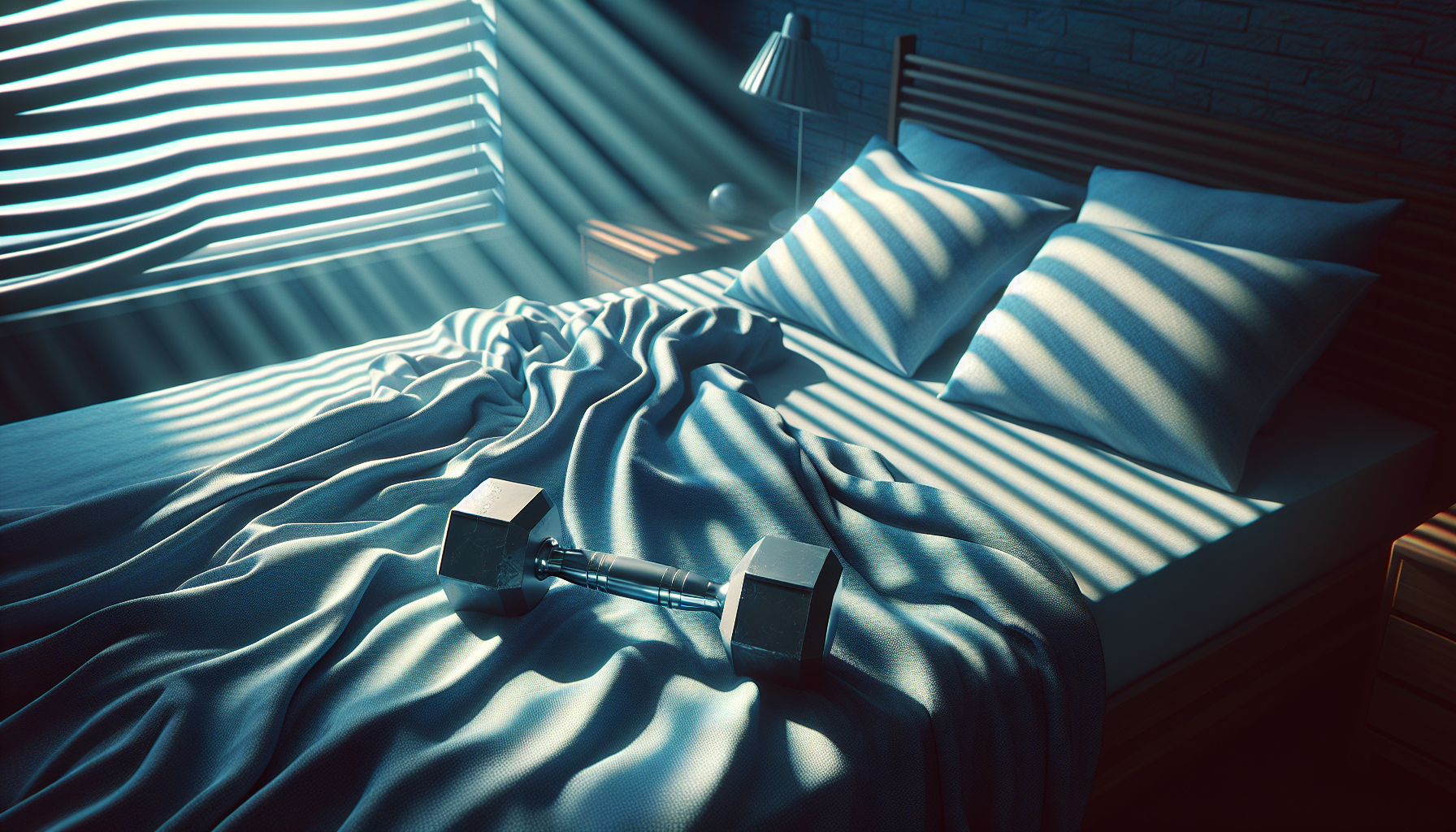
Do you ever wonder why your attempts at lifting dumbbells leave you feeling more like a deflated balloon rather than a pumped-up athlete? Does hitting the snooze button feel like the only exercise you’re getting these days? Well, you might want to look under the covers—literally. Let’s talk about the fun-sucking villain in your otherwise fantastic fitness journey: lack of sleep.
Your sacrosanct sanctuary, the bed, might right now seem like a throne of laziness, but if you don’t pay it the homage it deserves, your aspirations of becoming the next gym legend might take a nosedive. Meanwhile, all those people in your HIIT class with the energy of 1,000 toddlers? They’ve probably made their bed-time a non-negotiable part of their routine. So gather ’round as we unpack the weighty, or sometimes weight-losing (in muscle that is), issue of sleep deprivation and how it can make your kettlebell dreams vanish into thin air. Pun very much intended.

Why Sleep Matters: The Basics
Before we stretch further, let’s tackle why sleep is your invisible gym buddy, the one that doesn’t sweat on you or hog the water fountain. Sleep is fundamental to life, much like Wi-Fi and dogs in sweaters. It’s during sleep that your body goes into a full-service repair mode, tightening bolts and changing metaphorical spark plugs.
Sleep Stages: It’s a Whole Production
Would you have guessed that your sleep cycles are more organized than a Swiss watch? In a rather intricate dance, your body goes through various sleep stages, each with its own special role. There are two main types: Rapid Eye Movement (REM) sleep, where your eyeballs dart around like they’re watching a tennis match, and Non-REM sleep, which is further divided into lighter and deeper stages. During deep sleep, your body releases growth hormones, crucial for muscle repair and regeneration.
Miss out on those stages, and you’re basically grounding your body’s flight to Fabulous Fitness Land. You can think of these cycles as the cogs of a never-ending machine, essential for everything from memory consolidation to cell repair.
How Much Sleep Do You Really Need?
You’re probably thinking, “But how much shut-eye do I actually need?” The golden standard for adults is 7 to 9 hours. And no, a series of 15-minute naps strung together by an all-nighter on TikTok does not count. Your body craves a solid block of sleep to effectively perform its nightly mark audits.
Sleep Debt: Can You Really “Catch Up”?
Ah, sleep debt—the concept that your missed hours of sleep can be paid back like overdue library books. Sorry to burst your bubbles, but it’s not that simple. Imagine drinking a gallon of coffee Friday morning intending to stay awake indefinitely. Trust me; you’ll crash before being able to legally buy more coffee. Similarly, trying to “catch up” on missed sleep only throws off your internal clock, resulting in more grogginess than recovery.
The Physiological Impact of Sleep Loss
Alright, let’s address the glaring specter that hovers over your failed resolutions and broken New Year’s promises. Your muscles and energy levels aren’t the only parts of your fitness regimen that feel left out when you’re lacking sleep. Sleep deprivation throws a wild party inside your body, and you definitely weren’t invited.
Hormones: A Balancing Act on a Tightrope
First off, hormones are a huge deal, kind of like the ‘Who Actually Should Get a Rose?’ and another of The Bachelor drama. These are chemical messengers that control almost every major bodily function—including your appetite, metabolism, and ability to build muscle. When you skimp on sleep, cortisol, the stress hormone, enters the scene like an unruly party crasher. This is not a good thing unless collecting belly button lint is your new hobby. Plus, without enough sleep, your insulin sensitivity can decline, causing weight gain—the kind that clings to you like a rich aunt’s unwanted hug.
Ghrelin and Leptin: Appetite’s Yin and Yang
Then there are our guest stars, Ghrelin and Leptin—the Yin and Yang of appetite. Ghrelin basically tells you, “Hey, let’s eat everything. Yes, that includes the five-day-old sushi.” Leptin counters with, “Perhaps we’ve had enough, yes?” When you’re sleep-deprived, this duo spectacularly fails at their dynamics, leaving you reaching for chips instead of celery. If you’re planning on flaunting those abs by beach season, you might want to reconsider ditching pajama time.
Immunity: Armor or Tissue Paper?
The next culprit on the list—your immune system. Think about it like this: when well-rested, your immune system’s a fortress; without enough sleep? It’s as leak-proof as a story in a high school lunchroom. Sleep deprivation leads to a reduction in cytokines—proteins that help fight off infections, inflammation, and stress. When those protein levels plummet, suddenly that sneeze from the guy next to you on the treadmill feels like a lurking threat.
The Mental Olympics: Willpower, Memory, and Coordination
If you ever find yourself tying noodles instead of shoelaces after skipping sleep, you’ll know things have gone awry. Sleep affects your mental faculties in ways that make your regular cognitive dissonance seem like a picnic in the park. We’re talking about memory, focus, coordination, and the almighty willpower.
Willpower: Not Just for Diets
Tiredness is that pesky demon squishing your willpower like Play-Doh. Sleep deprivation leads to reduced alertness, impairing your decision-making abilities. This means your intent to bake chicken can abruptly pivot to ordering triple cheese pizza. Oops. Goodbye willpower, and adieu inner dietician.
Memory and Learning: A Blocked Webpage
While sleep isn’t the answer to suddenly becoming fluent in Klingon, it does keep your neurons firing efficiently. Sleep helps consolidate new memories, sort of like hitting ‘Save’ after an all-nighter on a book report. Consistent sleep deprivation? That’s like finding out Word didn’t auto-save. Yikes. Remember those sweat dripped cues you memorized? Bye-bye efficiency!
Coordination: Grace of a Giraffe on Rollerblades
Ah, coordination, the unsung hero behind nailing that Zumba class or not tripping over thin air. Skimp on sleep, and even the simplest of tasks may send you crashing down like a toddler attempting salsa dancing. Pro tip: Stick to sleeping if you plan to ace that burpee combo next workout.
Sleep and Workout Performance: The Great Non-Duopoly
Now, onto the core of this sleep-fitness conundrum: your superhuman efforts at balancing exercise—and failing gloriously because lack of sleep sawed through the ropes. Sleep taps into a list of performance-related metrics, much like an overbearing wedding planner regimenting mother-in-law seating.
Stamina: A Burning Fiasco
If you’re the type who thrives on stamina to fuel CrossFit antics, sleep is crucial. Without it, your endurance takes a nosedive faster than an ice cream scoop on Riviera’s warm beach. Your ability to power through those grueling workouts dwindles, leaving you at the back of the peloton.
Strength: Weights Carry the Weight
As much as you yearn to Hulk smash those weights, your muscles have other plans. Sleep deprivation impairs protein synthesis, meaning your Herculean strength takes a gracious bow out—whether you like it or not. Small tears in muscle that need rest for recovery? They just turn into aching regalia of frustration instead.
Recovery: The Unfriendly Ghostwriter
Imagine working out, then staring endlessly into the gym mirror wondering how your hard-earned six-pack is now a four-pack. Lack of sleep hinders recovery from exercise-induced stress and muscle damage. In simple terms, it cheats you on gains, making progress only a dream away. Sad trombone.

Practical Tips: How to Catch Those Elusive Z’s
Can we tackle this sleep quandary in manageable, treadmill-paced steps? Good news, you don’t need Doctor Sleep to figure things out—there are some practical approaches to putting the ‘rest’ back in ‘restoration.’
Establish a Routine: More Basics Than Cornflakes
Consistency is key. Regular sleep patterns, waking up, and going to bed the same time everyday will stabilize your circadian rhythms, those elusive internal-timekeeper parents. Pretend you’re hosting the same late-night talk-show every day. Boring? Perhaps. Necessary? Absolutely.
Bedtime Rituals: You Are A Literal Sleeping Beauty
Lavender sprays, eye masks, the works. Establish a solid bedtime routine that even Goldilocks would envy. Disconnect from screens, read a book, or meditate—whatever helps you float seamlessly into sleep abyss. Avoid wolfing down spicy lasagna right before hitting the hay, unless you enjoy tragic nightmares starring talking food.
Exercise: But Don’t Overdo It
Exercise has a superstar role in stress relief and, fittingly, improving sleep. But overworking during late hours spikes energy levels instead of channeling towards sack-time. Stick to morning or early evening workouts; let your body unwind for a peaceful, snore-laden reward.
Nutrition: Brain Fuel is Real
Avoid caffeine in PM hours and instead, opt for chamomile tea. Balanced nutrition nurtures your rhythm more than last-minute calories. Load up on carbs? Yeah, that’ll lull you right into a restful hangover. Your best pre-bed feeding frenzy involves light and healthy bites, sans nachos.
Sleep Environment: Create Your Cozy Narnia
Dim lights, cool temperatures, and silence aid sleep like a magic wand. Your room should suggest slumber as unapologetically as a mom suggesting vegetables. Transform your nest into hallowed grounds—the kind that Aunt Mildred wouldn’t toss while rearranging pillow puffiness.
Conclusion: Embrace the Power of Snooze
Here’s the final pillow talk: make sleep a prized partner, not a groggy afterthought. Fitness accomplishments come hand-in-hand with recovery. Snoozing may not give you immediate six-packs or angelic agility, and no, it isn’t the elusive Fountain of Youth—but it delivers the compound interest on willingness and capability.
Next time you plan to hit snooze, remember, sleep is your partner for life—smart enough to add quality to unadulterated exercise and supportive enough to redefine how far to push ambitions.
Now, if there’s a third cup of coffee lurking somewhere—might we remind you to buss it back and savor the refreshing power of true, undisturbed shut-eye instead? Your aspirations, and body, will thank you.